1. Browser-Native Architecture as an AI Interface
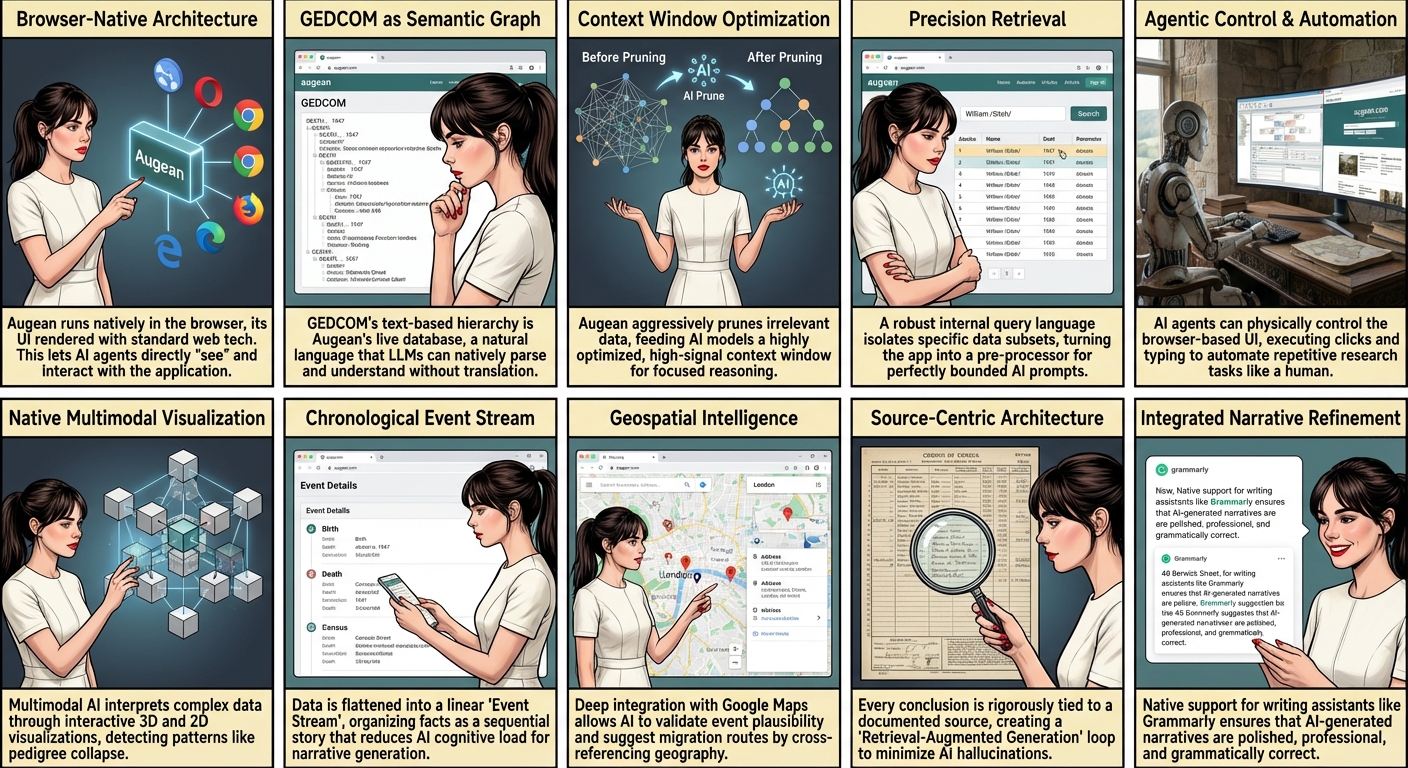
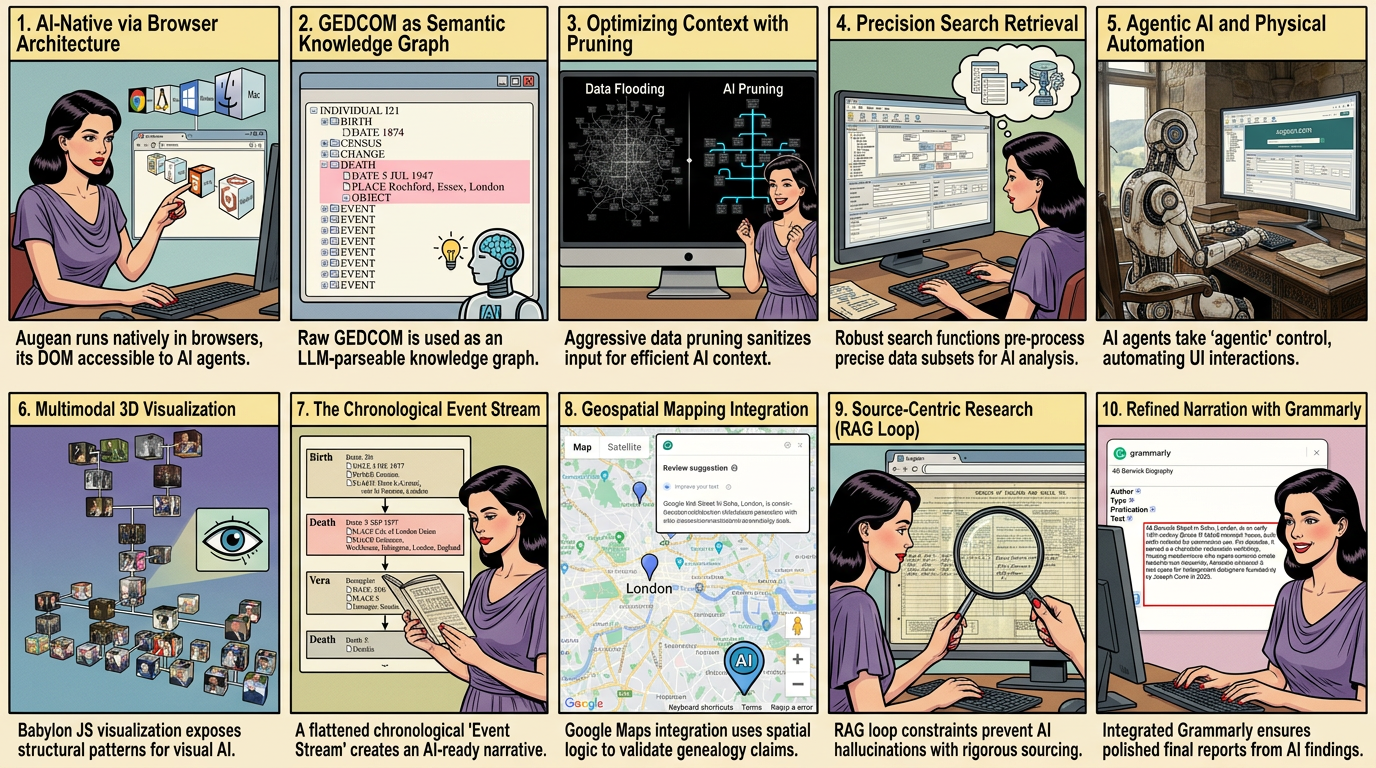
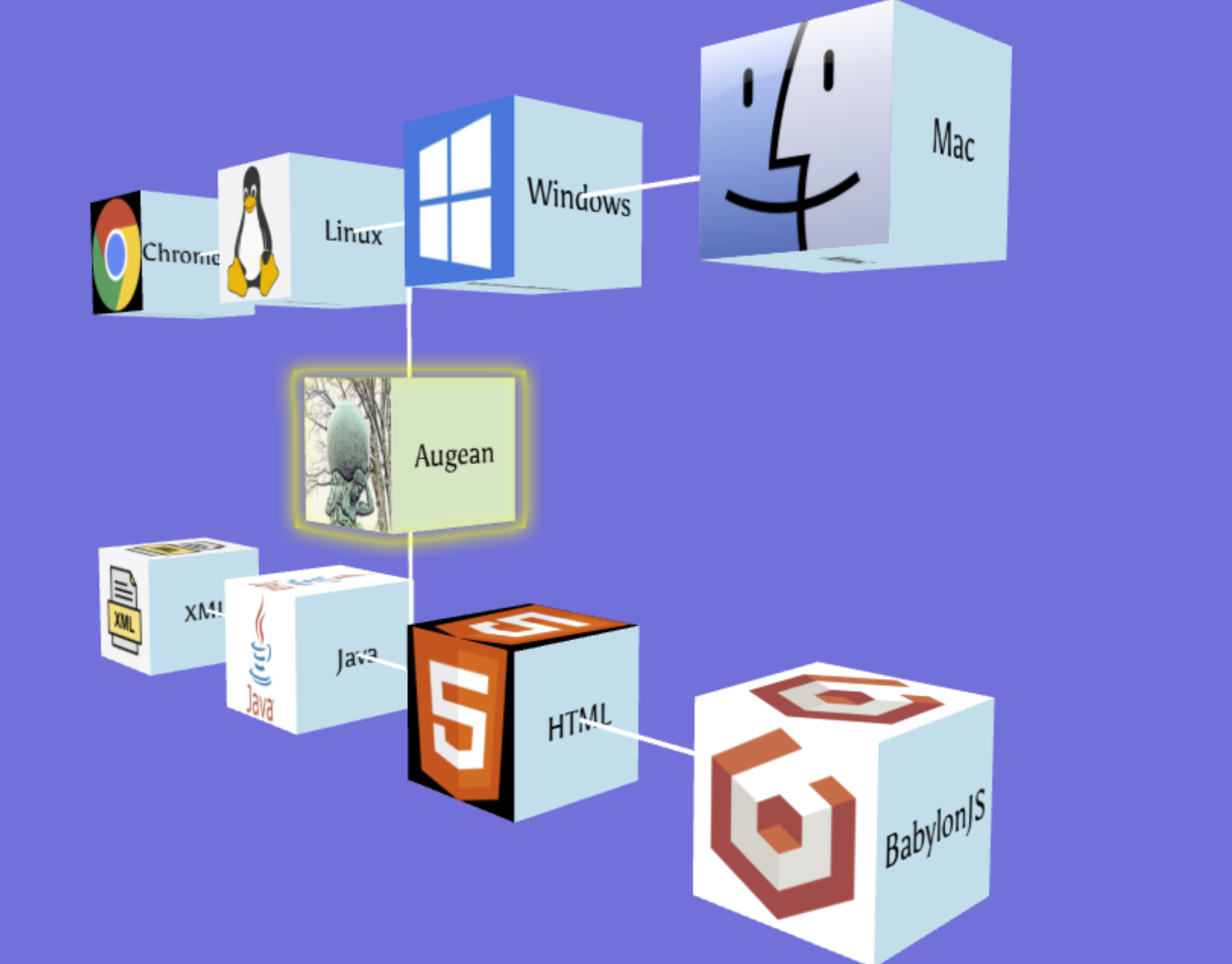
Augean.com creates a paradigm shift in genealogy software by functioning as the only desktop application that runs natively within the browser environment (Chrome or Edge). While the data resides locally on the user's machine for privacy and speed, the user interface is rendered entirely via standard web technologies (HTML, CSS, DOM). This architectural decision is the cornerstone of its "AI-Native" status. Since modern Artificial Intelligence models and autonomous agents are primarily trained to navigate, read, and interact with web pages, Augean’s browser-based UI makes it inherently intelligible to AI. Unlike traditional desktop apps built on opaque binary frameworks, Augean’s structure allows AI agents to "see" and "read" the application state directly through the Document Object Model (DOM), facilitating seamless interaction without the need for complex APIs.
2. GEDCOM 5.5.1 as a Semantic Knowledge Graph
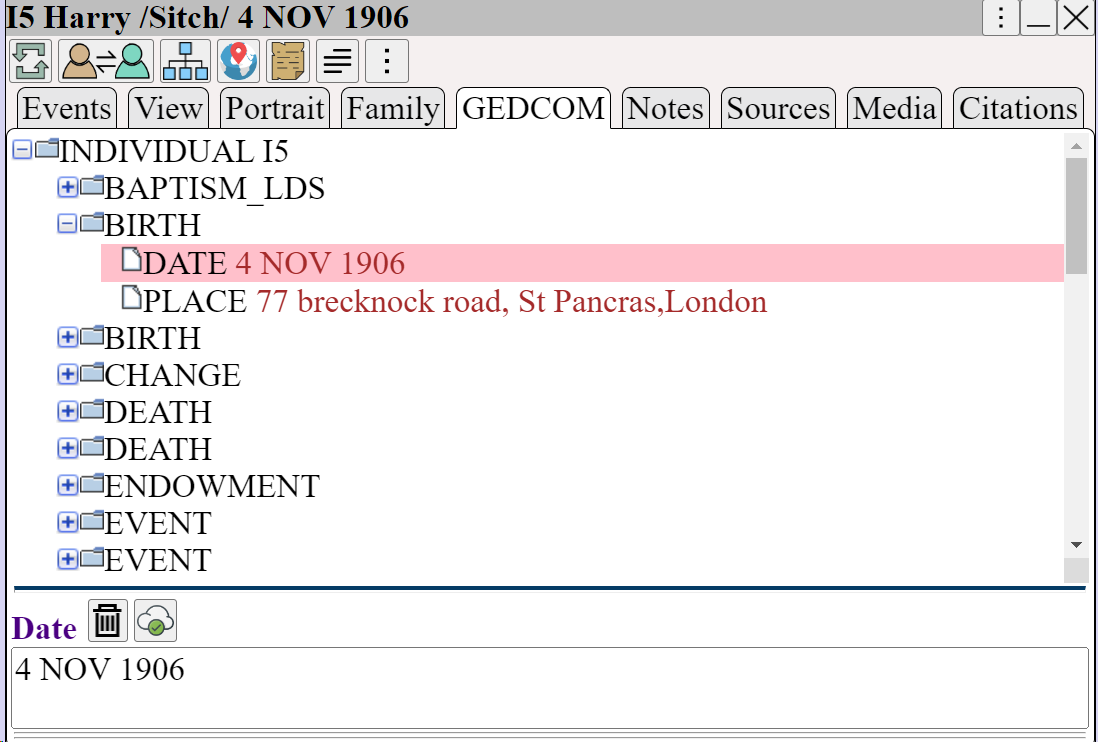
Augean utilizes the industry-standard GEDCOM 5.5.1 format not merely as an export protocol, but as its live, local database structure. Because GEDCOM is a text-based, hierarchical format, it serves as a natural language that Large Language Models (LLMs) can natively parse and understand. By maintaining data in this raw, semantic text format rather than a proprietary binary code, Augean allows integrated AI tools to directly ingest family tree data with zero translation loss. This "LLM-ready" data structure means that an AI can be fed a segment of the GEDCOM file and immediately understand relationships, dates, and event hierarchies, enabling it to perform logic checks or generate narratives based on the raw genealogical code.
3. Context Window Optimization via Data Pruning
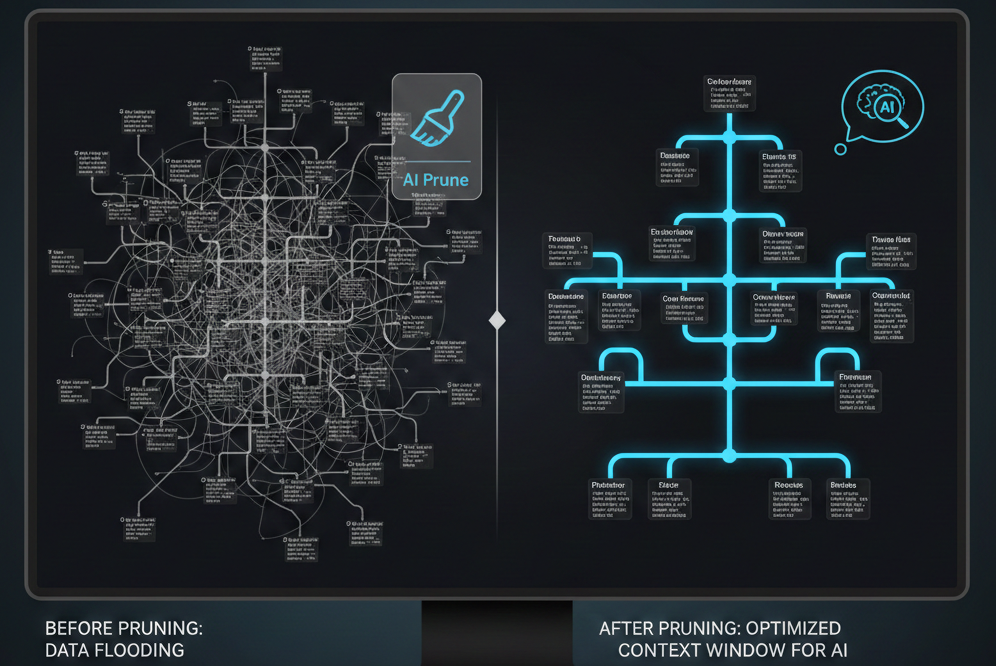
One of the primary limitations of current AI models is the "context window"—the maximum amount of information they can process at once. Augean addresses this through aggressive visual and data pruning features. The application allows the user to strip away irrelevant branches, hiding collateral lines or unrelated events from the view. By dynamically rendering only the pertinent data to the browser window, Augean effectively sanitizes the input for the AI. When an AI agent "looks" at the screen or processes the page content, it is not flooded with noise (irrelevant relatives); instead, it receives a highly optimized, high-signal dataset focused strictly on the research problem at hand, maximizing the AI's reasoning capabilities.
4. Precision Retrieval with Search Query Language
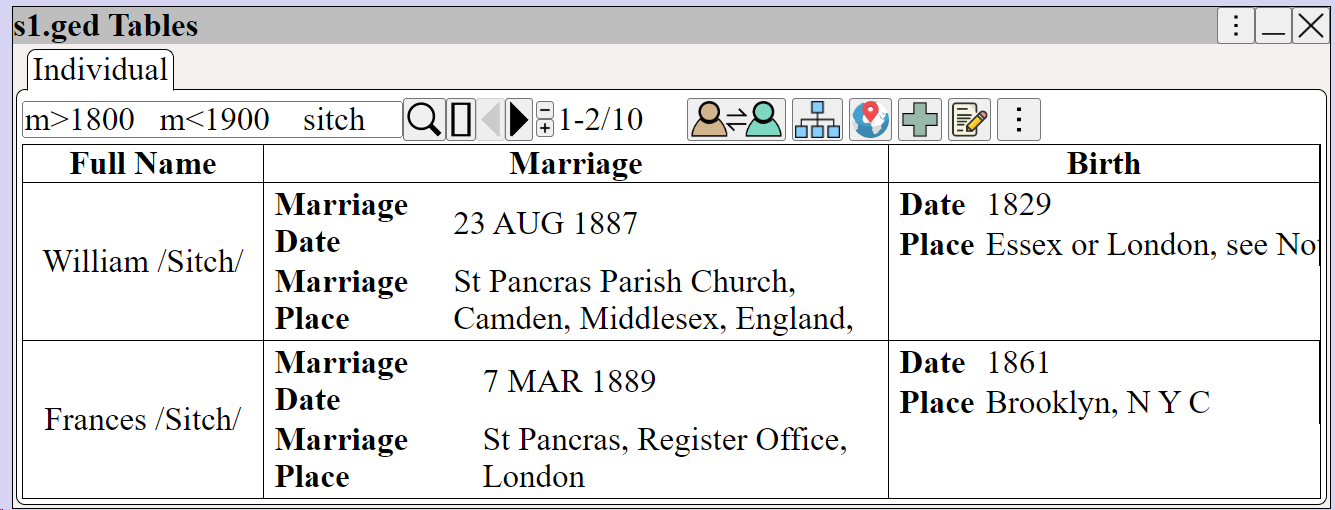
Complementing its pruning capabilities, Augean features a robust internal Search Query Language that allows for granular data selection (e.g., "Select all individuals born in Virginia between 1700 and 1750"). This feature is critical for AI workflows because it allows the software to generate specific data subsets that serve as perfect "prompts." Instead of asking an AI to "find anomalies in the database," a user can use the query language to isolate a specific demographic cohort and feed only that group to the AI for analysis. This turns the application into a pre-processor for the AI, ensuring that the model is reasoning over a coherent and logically bounded set of records.
5. Agentic Control and Physical Automation
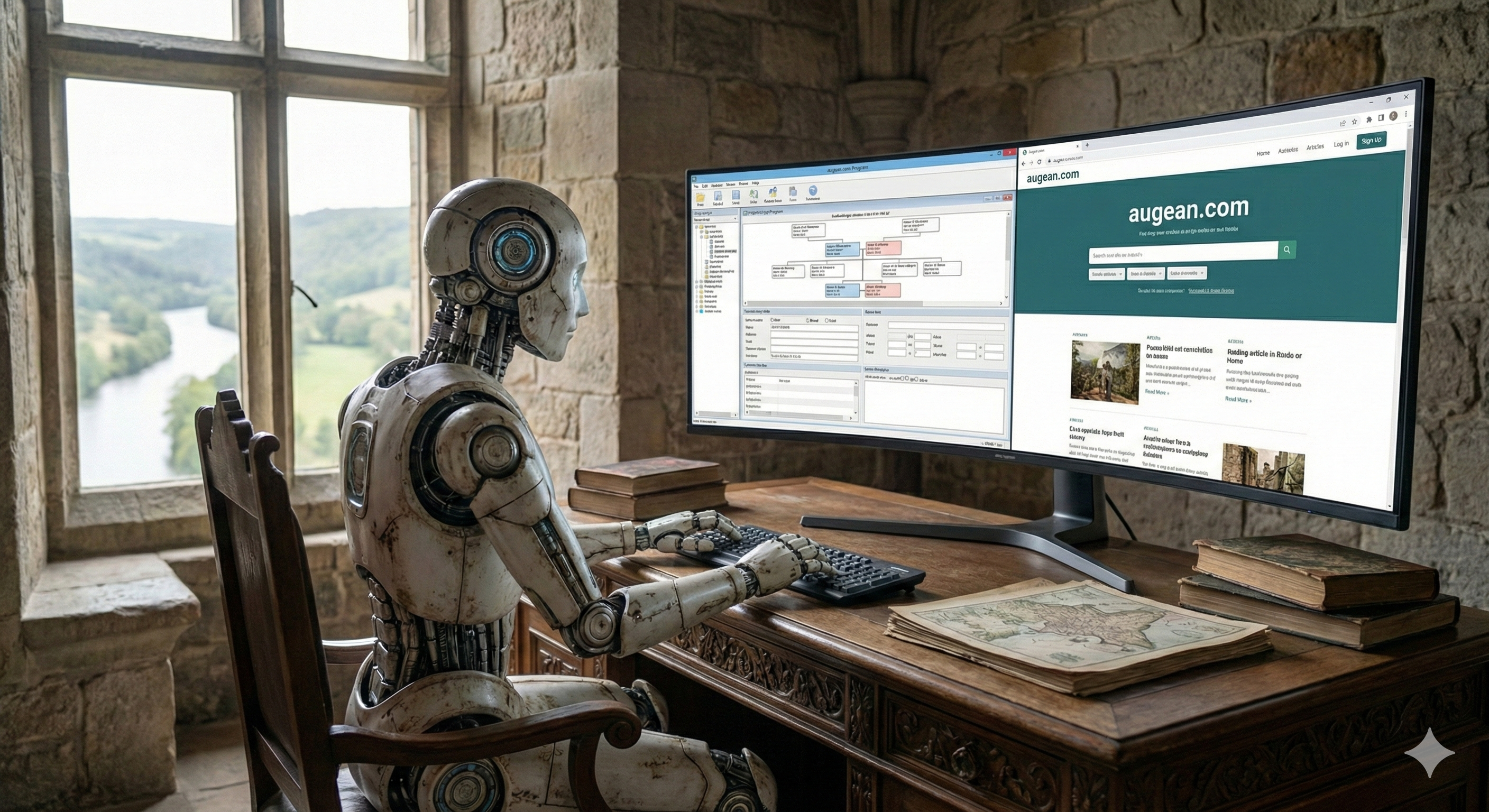
Augean pushes beyond passive analysis into the realm of Agentic AI, where the artificial intelligence takes physical control of the research process. Because the application exists within the browser, it permits AI agents to interact with the interface just as a human would—executing clicks, typing into fields, and navigating between tabs. This allows for the automation of repetitive tasks; an agent could conceivably be tasked to "standardize all date formats" or "open every source link for this family," and it would physically navigate the UI to perform these actions. This capability transforms the AI from a chatbot into a functional operator that drives the software.
6. Native Multimodal Visualization (2D and 3D)
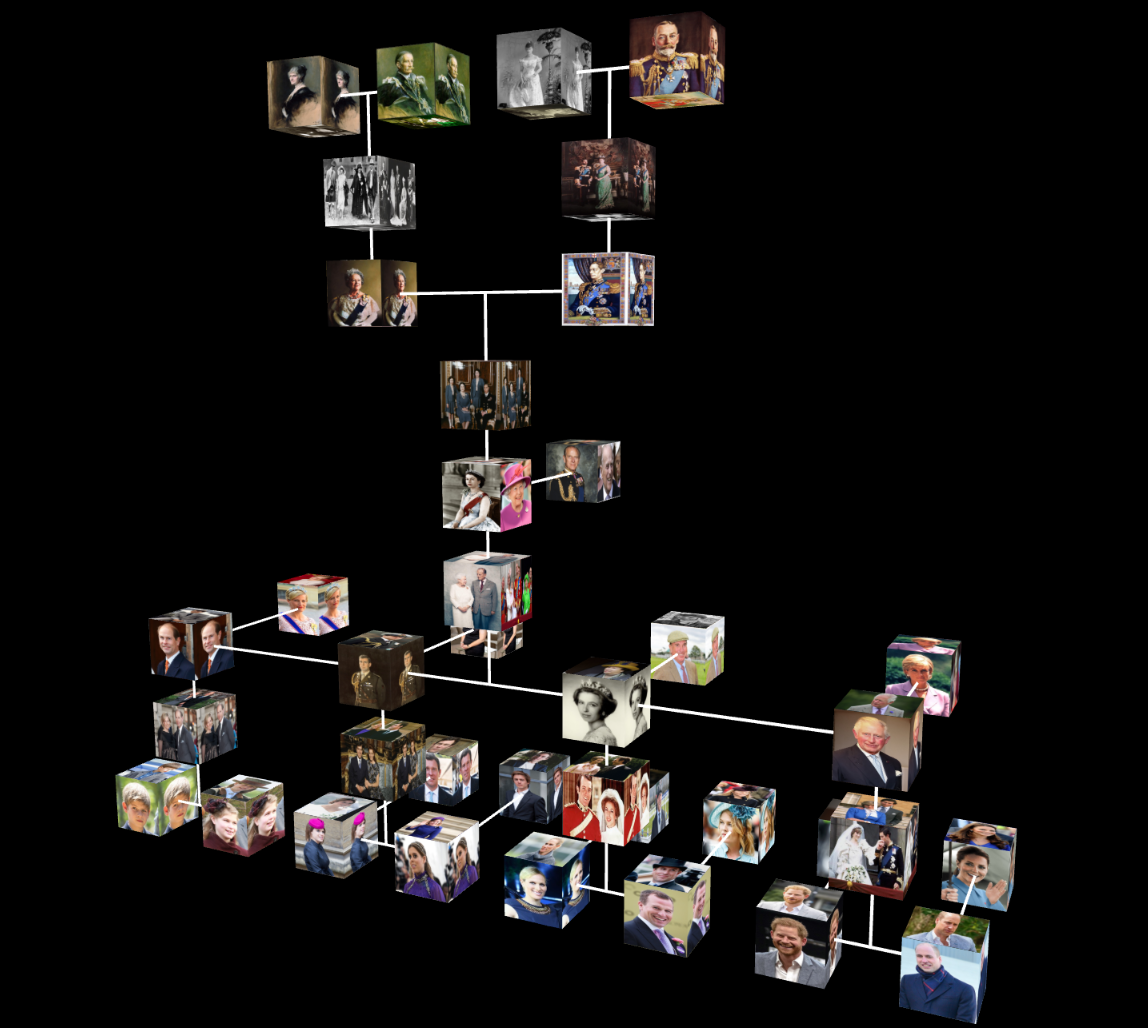
The platform leverages the Babylon JS engine to render complex genealogical data into interactive 3D structures, alongside traditional 2D charts. This multimodal visualization capability is essential for "Native AI" interpretation. Advanced AI models are increasingly multimodal, capable of understanding spatial relationships. By projecting a flat database into a 3D Block Chart or Mapel Chart, Augean exposes structural patterns—such as endogamy or pedigree collapse—in a way that visual AI agents can detect. Furthermore, these visualizations provide the human user with an intuitive interface to verify the AI's structural analysis of the family tree.
7. Chronological Structuring via The Event Stream
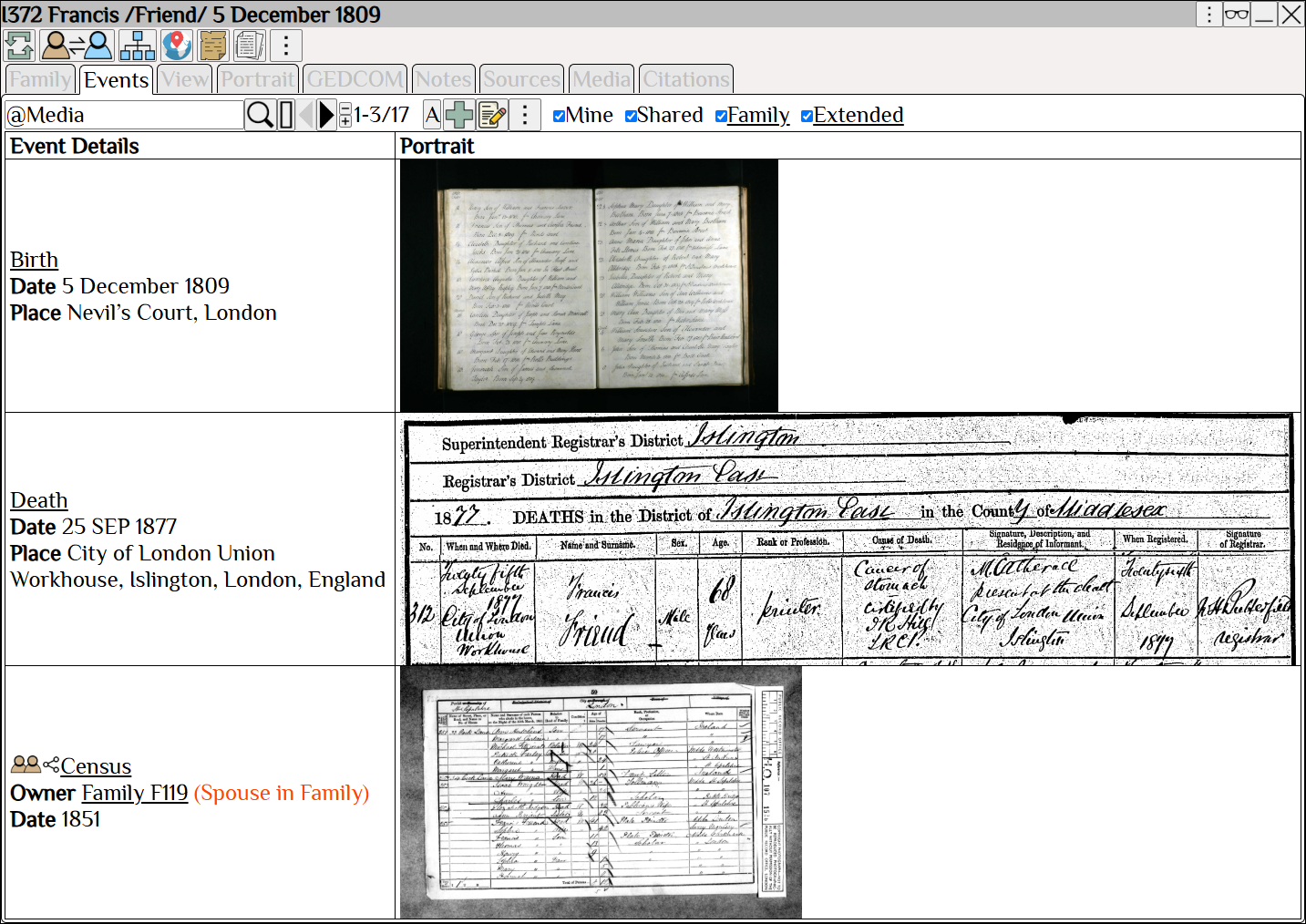
Augean organizes data through a strict "Event Stream"—a linear, chronological presentation of every fact associated with an individual or family. This feature aligns perfectly with the sequential processing nature of LLMs. By flattening a complex life into a coherent timeline of events (Birth -> Census -> Marriage -> Death), Augean formats the data as a "story" before the AI even touches it. This structure reduces the cognitive load on the AI, which no longer needs to reconstruct the timeline from scattered fields; it simply reads the Event Stream to understand the cause-and-effect progression of an ancestor's life, resulting in higher-quality narrative generation.
8. Geospatial Intelligence and Mapping Integration
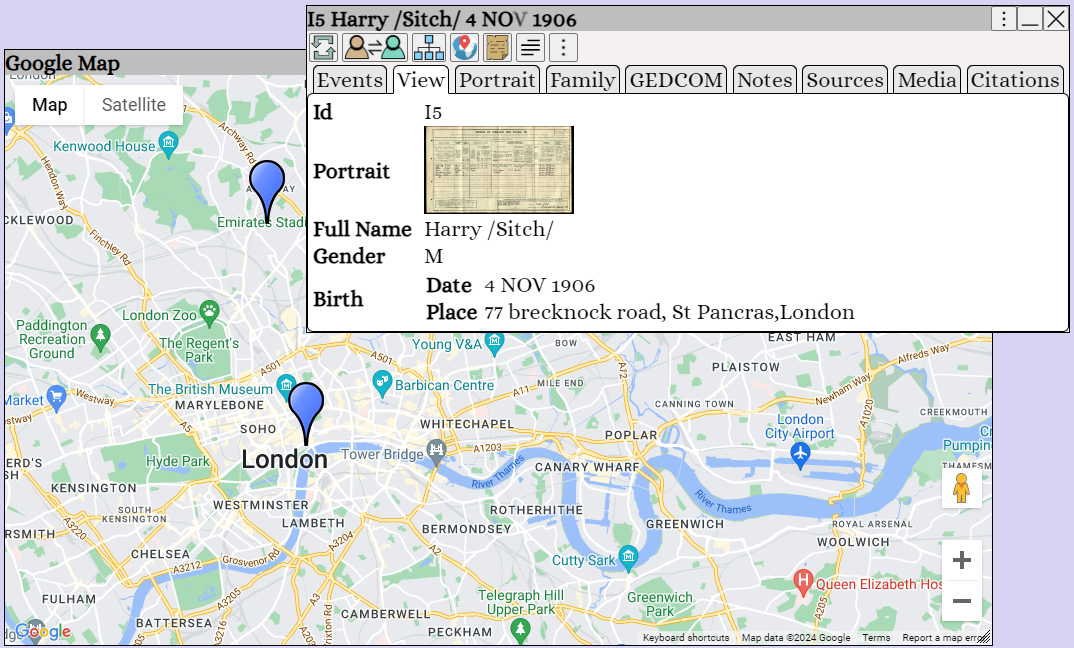
The application treats location data as a primary research vector through deep integration with Google Maps and Street View. This is not a static feature but a dynamic research tool; the AI can utilize this geospatial data to validate the plausibility of events (e.g., flagging that two events happened too far apart to be true) or to suggest migration routes. By embedding the "Events Map" directly into the browser view, Augean allows the user (and the AI) to visually cross-reference documentary evidence with physical geography, adding a layer of spatial truth to the genealogical claims.
9. Source-Centric Research Architecture
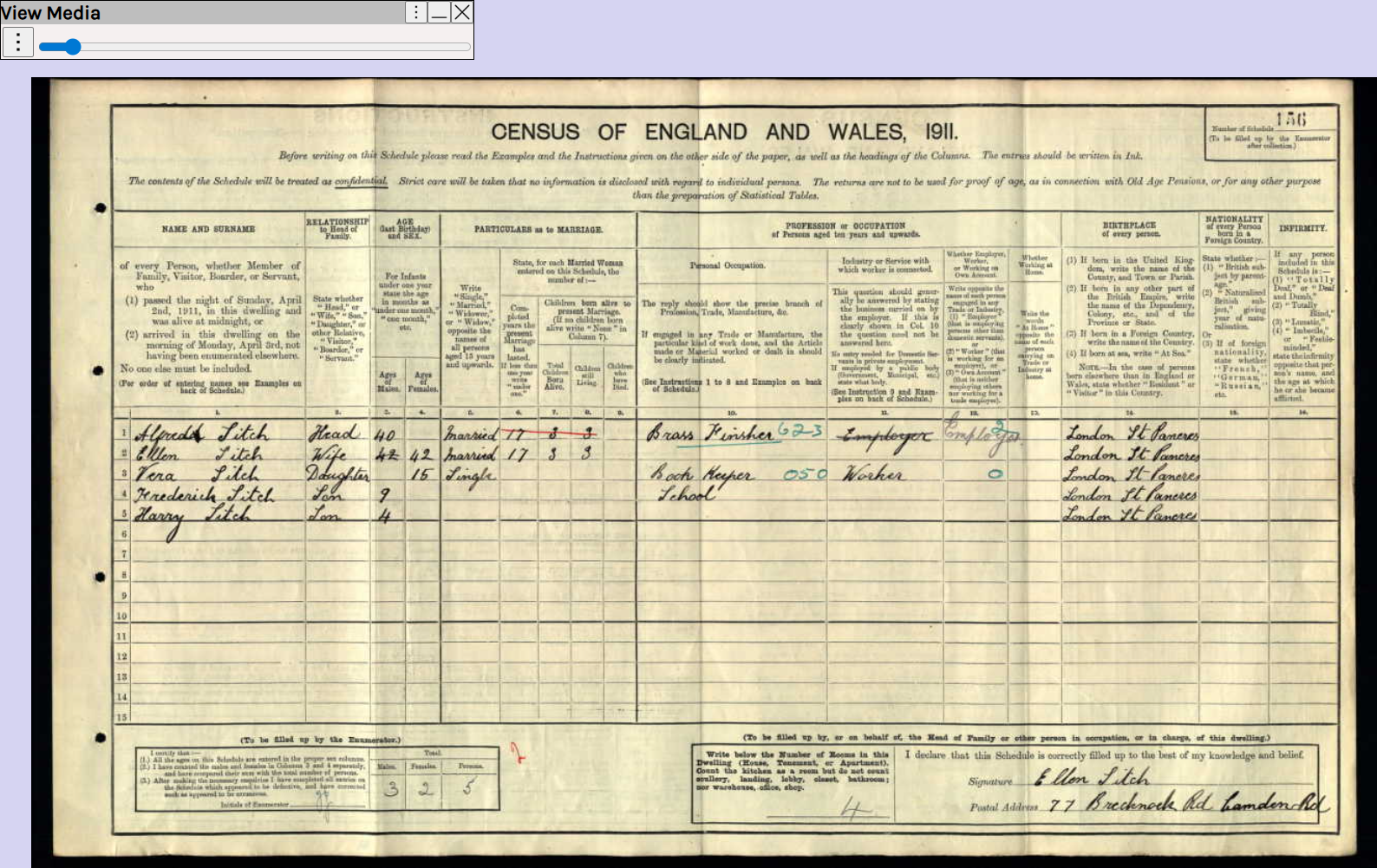
Augean enforces a Source-Centric Research model, where every conclusion is rigorously tied to a documented source. This architecture is vital for minimizing AI hallucinations. In an AI-native workflow, the "Source Box" acts as the ground truth. When the AI is asked to write a biographical sketch or solve a conflict, it is constrained by the citations linked in the Augean database. The software explicitly presents the source citation alongside the fact, enabling the AI to cite its evidence. This creates a "Retrieval-Augmented Generation" (RAG) loop where the AI’s output is constantly checked against the specific sources stored in the user's GEDCOM file.
10. Integrated Narrative Refinement (Grammarly Support)
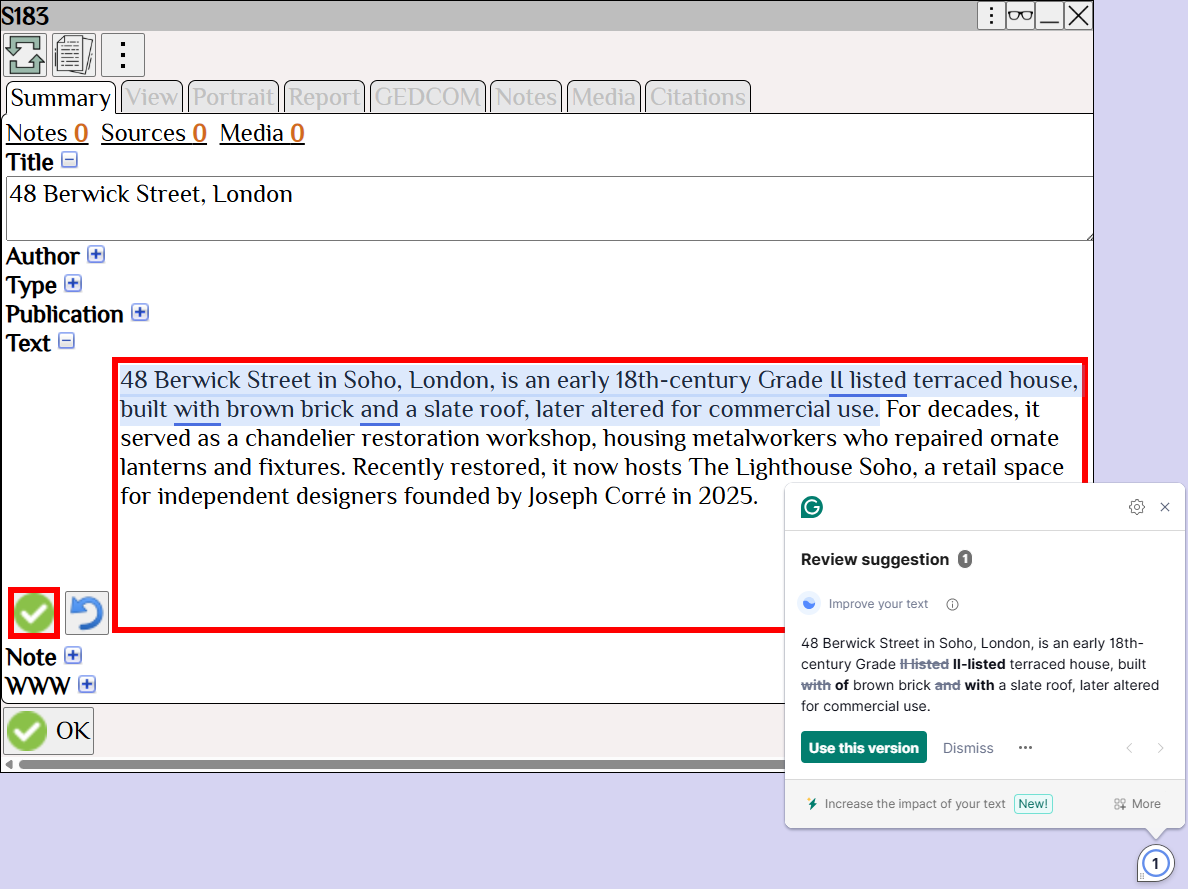
Recognizing that the final output of genealogy is often a written report, Augean includes native support for writing assistants like Grammarly. This integration ensures that the "generative" aspect of the AI workflow is polished and professional. Users can draft notes or biographical summaries within Augean, and the integrated AI instantly critiques the syntax, tone, and clarity. This seamless inclusion of editorial AI turns the platform into a complete publishing environment, where the user moves from raw data (GEDCOM) to structured analysis (Event Stream) to polished narrative (Grammarly) without ever leaving the application.